Describe what you need
Select a parts enquiry or unwanted motorcycle enquiry. Add a clear message explaining the part required or the condition of the bike.
Finding the right used part starts with knowing exactly which motorcycle it needs to fit. Learn how motorbike wreckers recover components, what details help identify a match and how to put together a useful enquiry.
Tumut Motorcycles is a proposed parts and motorcycle enquiry resource. Stock, purchasing arrangements and service locations are not confirmed.
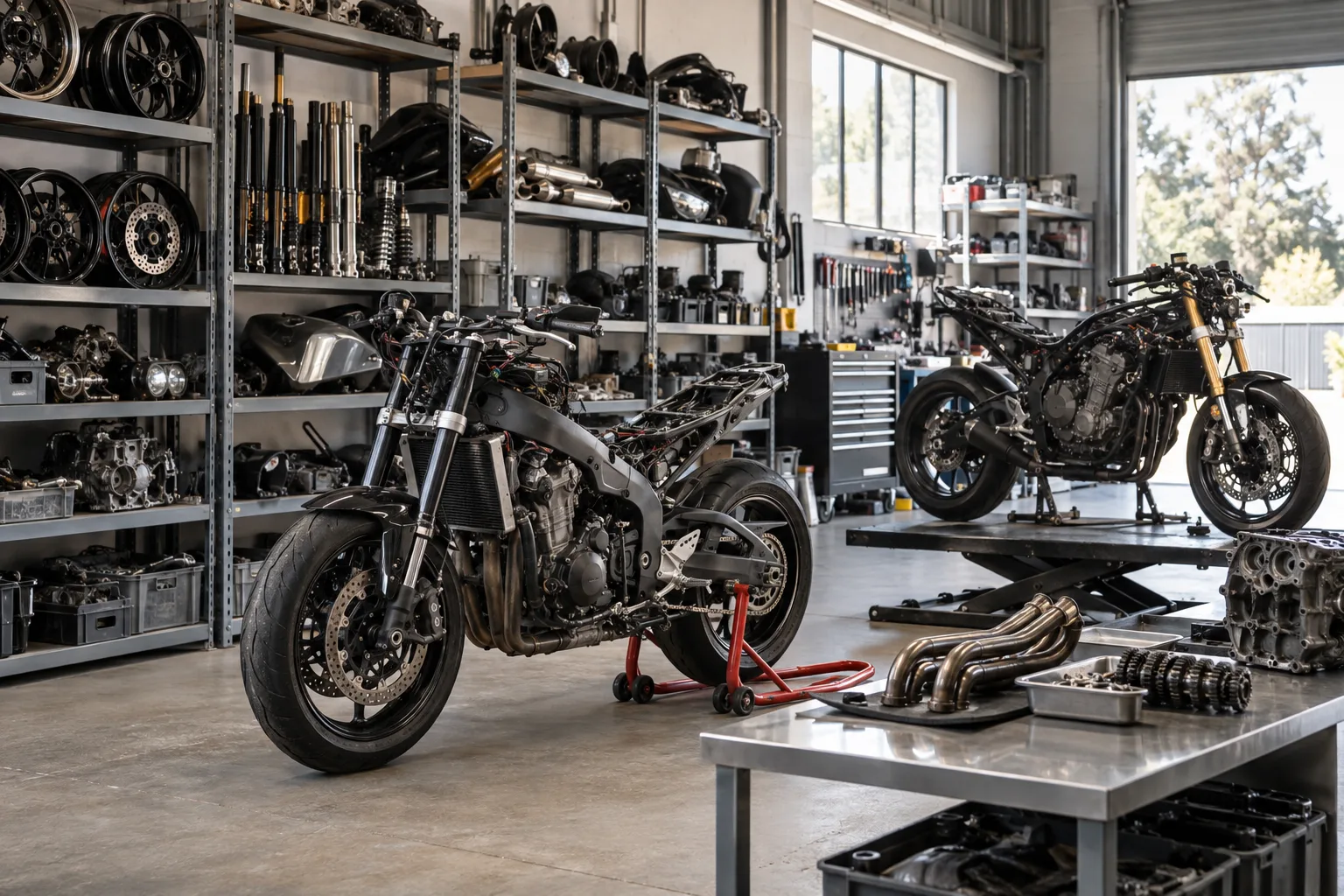
A motorcycle can reach the end of its useful life as a complete bike while still carrying serviceable components. Motorcycle wrecking involves dismantling a bike and assessing individual parts for possible reuse. Donor bikes may have accident damage, mechanical faults or an uneconomical repair bill.
Condition matters more than appearance alone. An apparently straight wheel can have run-out; an engine may need further inspection even if its external casings look sound. Ask what has been checked, what information is available about the donor motorcycle and what is included with a quoted part.
Fluids, batteries and damaged materials require suitable handling during dismantling. If you are arranging disposal, confirm the operator's process and any relevant requirements before handing over the motorcycle. This website does not currently verify a dismantling facility or make recycling guarantees.
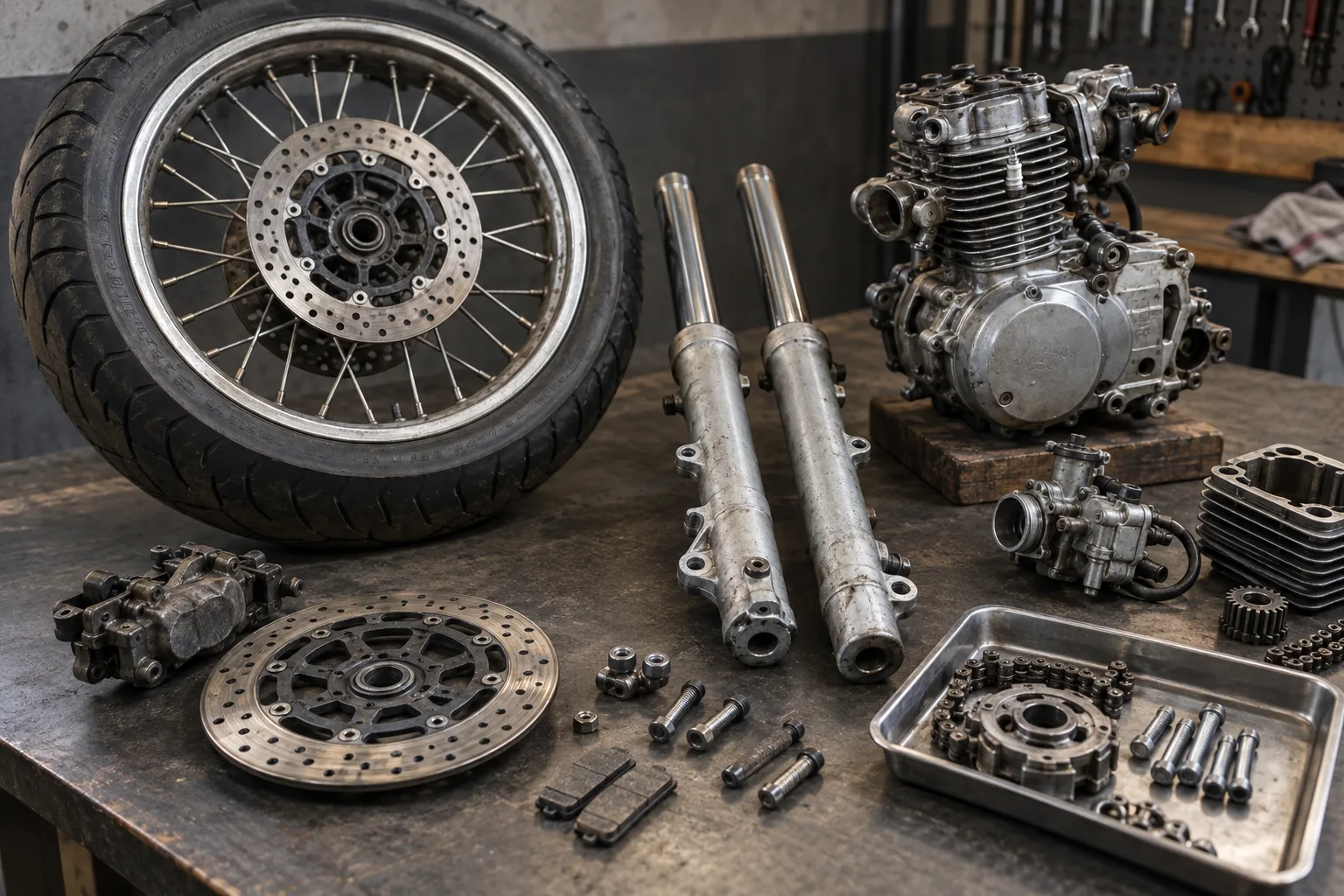
Used motorcycle components may suit a repair, restoration or replacement of damaged bodywork. Availability, condition and compatibility must be confirmed individually. The categories below explain common enquiries; they are not a live stock list.
A damaged, unfinished or non-running bike needs a clear description before anyone can assess it. Start with the make, model, year and location, then explain why the motorcycle is no longer being used.
List known faults honestly. Mention missing components, accident damage, engine problems and how long the bike has been stored. If keys or ownership documents are unavailable, say so at the beginning.
An enquiry is not an offer to purchase your motorcycle. Any buyer would need to confirm suitability, ownership requirements, price and the handover process with you directly.
No purchase, collection, payment amount or response time is promised through this page.
Select a parts enquiry or unwanted motorcycle enquiry. Add a clear message explaining the part required or the condition of the bike.
Include the make, model, year and variant. A part number is useful when you have one; a registration year alone may not identify the correct model.
Any availability, price, condition or assessment needs confirmation. Ask questions about testing, inclusions, delivery and terms before agreeing to anything.
Retain the description and any agreed terms. Have compatibility and safety assessed before fitting a used component to a motorcycle.
Motorcycles with similar names can use different components. Production changes, imported variants and previous modifications all affect fitment. Record the model designation from the bike itself and compare the existing component's markings with any proposed replacement.
A VIN or chassis number can help a supplier identify a variant, but it should only be shared through an appropriate private channel when required. Do not post ownership documents or personal identification in a public listing.
For a parts enquiry, useful details include the original part number, which side of the bike the part fits, mounting measurements and whether the motorcycle has been modified. This form does not accept photographs; describe what you can and ask how to provide images if a follow-up is available.
Motorbike wreckers dismantle motorcycles and assess components for reuse or appropriate disposal. The services offered differ between operators. Confirm whether an operator handles your type of motorcycle and whether it sells individual parts, buys bikes or arranges transport.
Depending on condition, a donor motorcycle may provide engine components, wheels, suspension, electrical items, controls, exhaust parts or bodywork. Recovery does not establish that a part is safe or suitable for your bike. Inspection and compatibility checks are still needed.
Start with the motorcycle's exact model and production year, then look for a part number on the original component or in a suitable parts catalogue. Describe the fault and the component's location. Confirm superseded part numbers and model variants with a knowledgeable supplier or repairer.
Yes, you can submit details using the enquiry form. Include the known damage, missing parts, whether the engine turns or runs, and the suburb or postcode. Submission does not confirm that a buyer or collection service is available.
Ask about the donor model, condition, known faults, testing and exactly what is included. Clarify freight costs and any applicable return or warranty terms before payment. Never assume a universal policy applies to all used motorcycle parts.
No. The parts categories are general guidance, and the photographs are generated illustrations. Stock, operating details and service coverage have not been verified. Any specific availability must be confirmed before a purchase or repair is planned.
Send a parts or unwanted-bike enquiry with the details you have. A precise description helps reduce uncertainty about the motorcycle and the request.
The information you submit is sent to the website operator through SMTP2GO to handle your enquiry. It is not published on this page. Please do not include payment details, passwords, identity documents or other sensitive information. You may request correction or deletion by replying to any response you receive. This website uses no advertising or analytics scripts.